Yes, you can see the Milky Way from anywhere with infrared light.
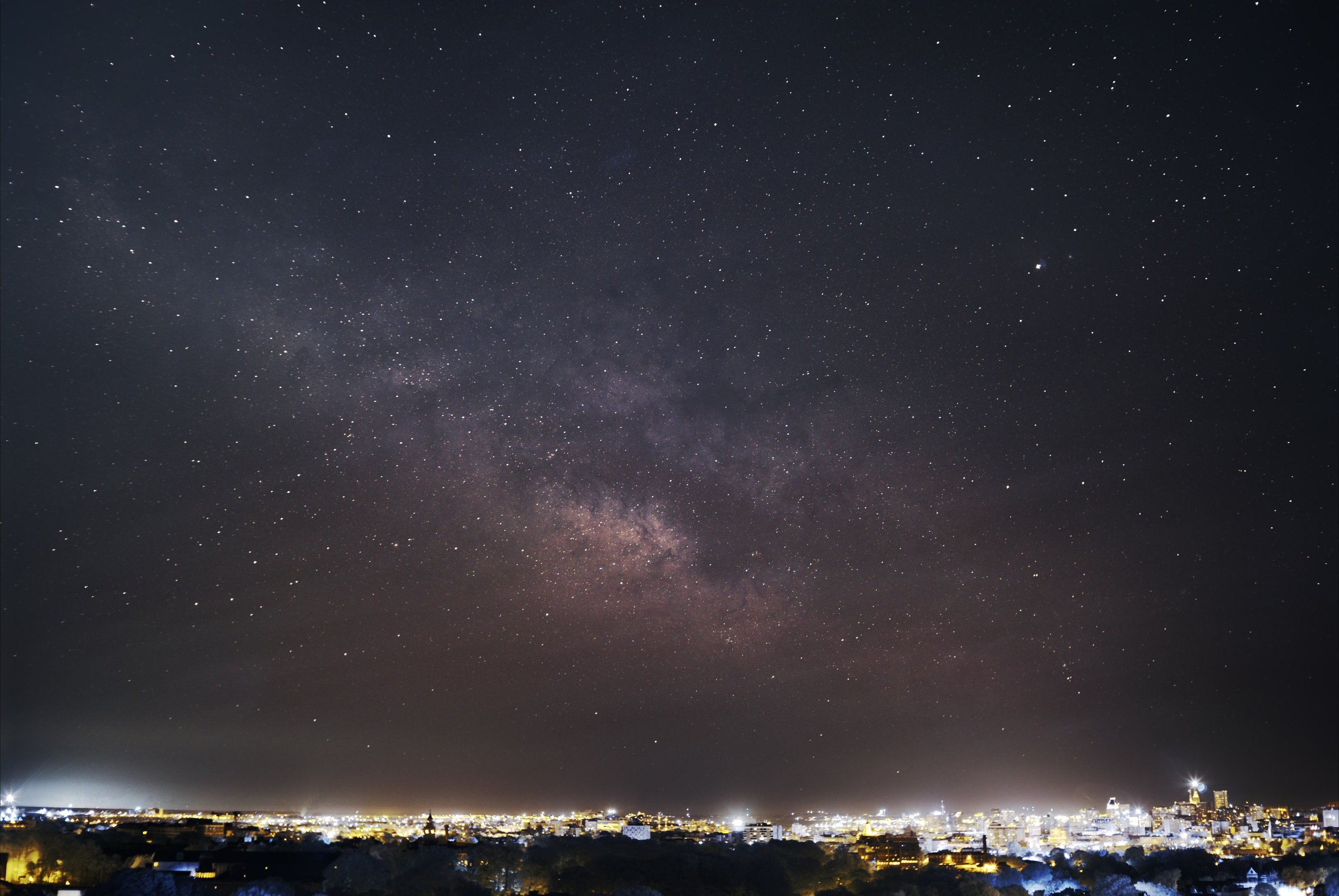
Milky Way over Baltimore, MD
I had no idea what to expect, or if it would even work.
I had just shipped my camera to get a full spectrum modification. Initially I just wanted to get better signal in the red channel, but once I saw what infrared photography could do, I started researching. At some point, I found a light-curve chart for city lights and noticed that their radiance falls off significantly once you get to 720nm and above. This was already the range I intended to start out with once my camera came back.
It was made all the more tantalizing when I couldn’t find anything online about other people using infrared to photography to capture the Milky Way in the city. When my camera arrived, I embarked to a dark-ish sky (as dark as I could get without driving more than 20 minutes) and set up to capture a new target. The Milky Way wasn’t even my main target that night, it was just a bonus to see if it was even possible.
Standing in a Bortle 6 sky with nearly a full moon, I wasn’t expecting much. I would have been thrilled to see anything at all.
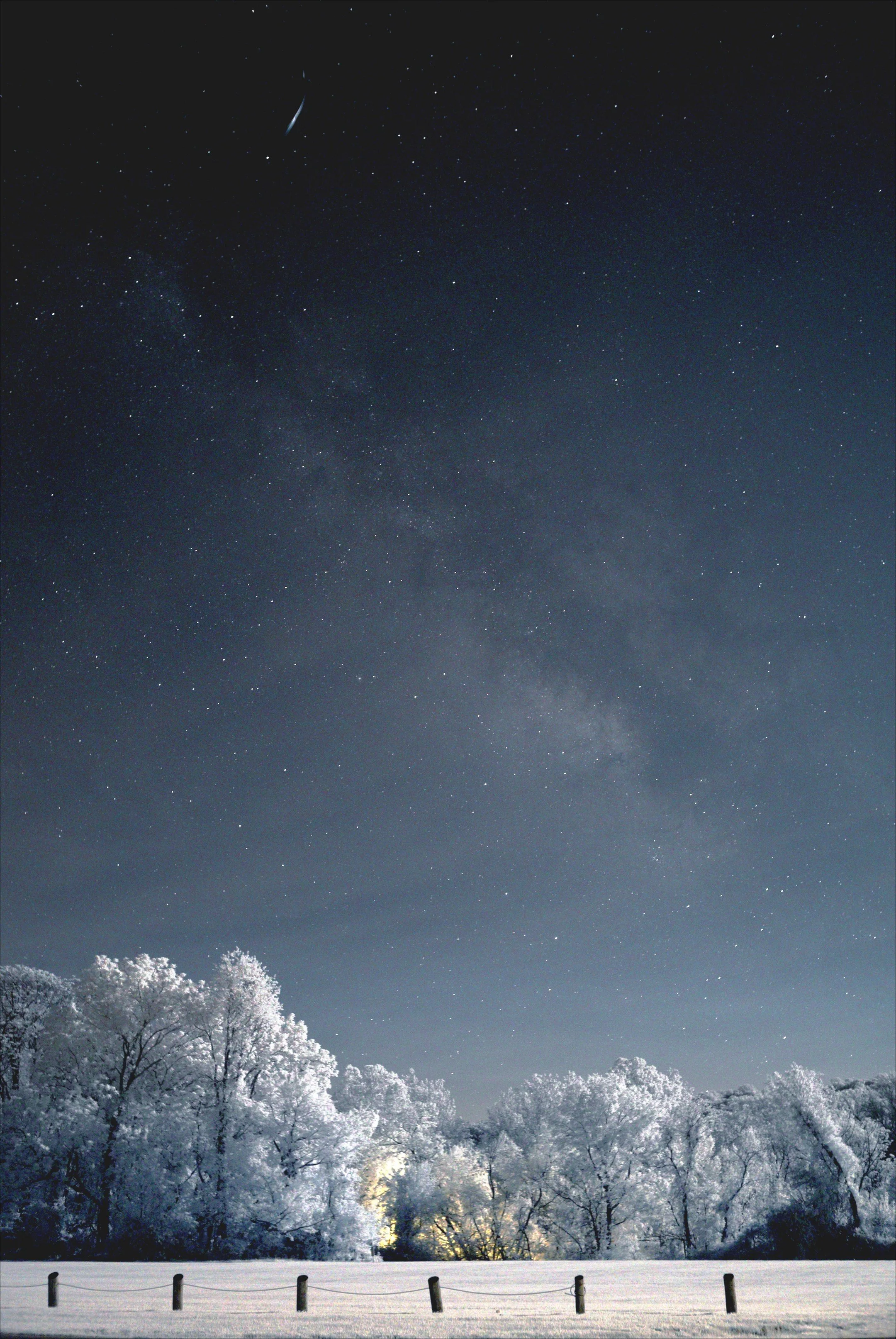
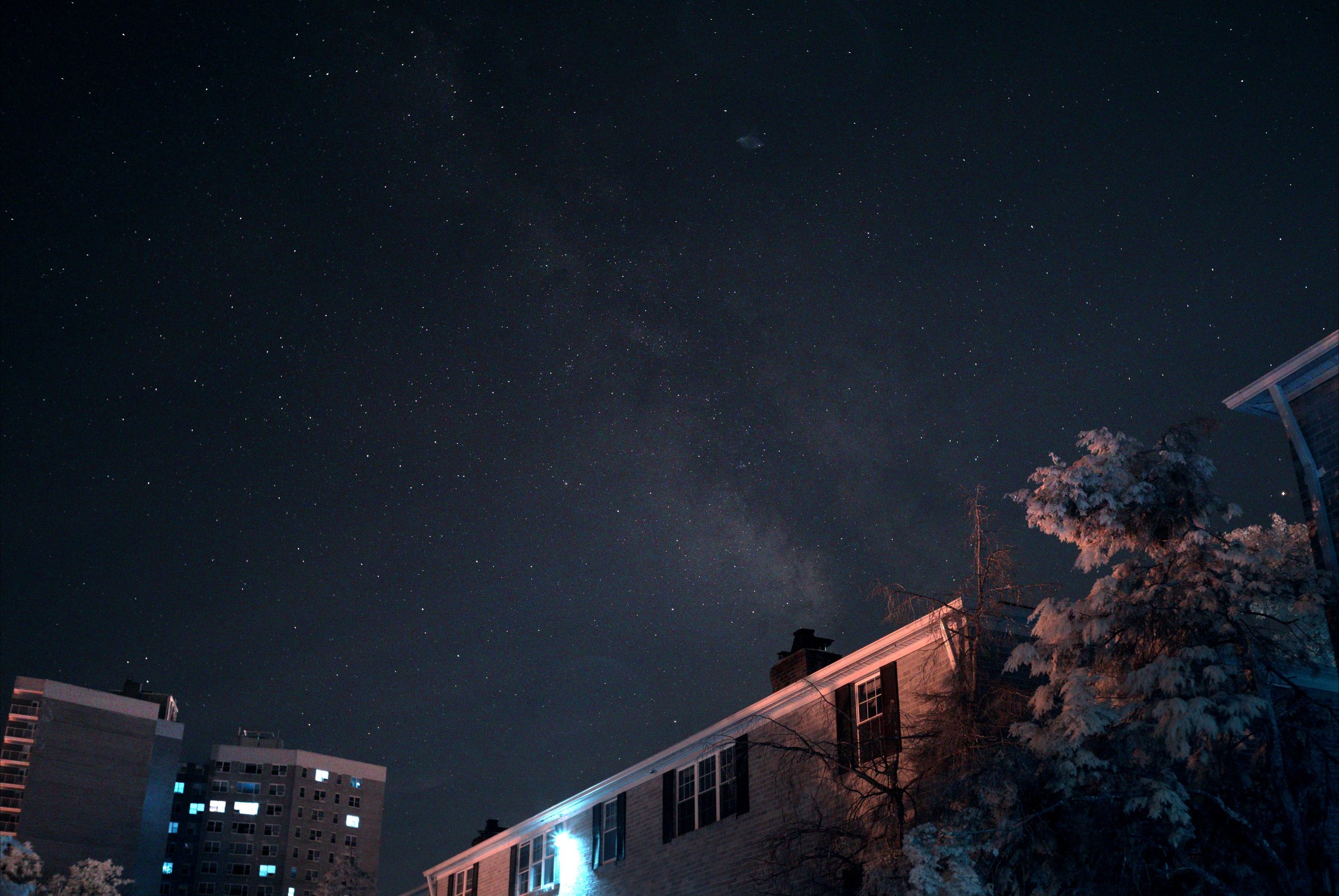
The first image was taken in that field…. In astrophotography, you usually have an idea of what you’re about to capture. There’s a lot of amazing astronomers with telescopes out there and there’s always someone with better gear than you. So unless you’re the first to discover something, you’re probably looking at someone else’s photos to decide on your next target; you already have something to compare with your image to see how it “should” look.
When I snapped that first photo, I genuinely had to sit down. There was so much happening in the frame that I wasn’t expecting. Not only could I see through light pollution and moonlight, but the nearly full moon lit the trees in a way that looked like something out of a dream. Distant, unknown light sources that were invisible to my eyes cast an orange glow. And of course, the dust lanes of the Milky Way were clearly visible from the very first shot.
I experimented with camera settings and framing for at least an hour before heading home. Before calling it a night, I decided to try capturing a photo from near my apartment complex. Between the bright city lights and the full moon, it was a worst case scenario. If I could see the Milky Way here, I could see it anywhere. Once again, a single shot was all I needed. There was virtually no difference in contrast between the city and that field. And now I have a new niche to obsess over for the summer…
If you want to try it for yourself, here’s the gear I used! Something to look out for is that IR is very sensitive to lens flares. If you can, find a spot that’s just above any nearby streetlights for the best results. The image of the Baltimore skyline was taken from the top floor of a parking garage.
Sony A7s (Full spectrum converted)
Kolari 720nm infrared filter
Any tripod (The sturdier the better)
